
Disinfection of the barn should be carried out regularly, and not only because animal health rules require that. Disinfection will protect cows from diseases caused by dangerous microorganisms, such as parasites (helminths and ticks), tuberculosis, lice.
In addition, if you milk a cow in an untreated area, there is also a risk to human health as dangerous pathogens can be transmitted with milk.
When should a barn be disinfected?
Disinfection must be carried out at least once a year, in the autumn, before the cows are in the stall all the time. However, experts advise treating the barn also in the spring, after a long winter period.
It is also important to disinfect the space:
- if at least one animal is sick. It is isolated from the herd, the pen is treated to avoid mass infection
- in case of death of any disease
- before the calves are transferred to the barn - their young organisms are more vulnerable to various infections; adults can become infected from the calf
- maternity stalls are disinfected every two weeks
How to disinfect?
The barn should be treated with disinfectants only after a thorough cleaning. This step cannot be skipped, otherwise the treatment will be ineffective: unremoved organic compounds will react with the chemicals of the disinfectant and its disinfecting properties will decrease.
The first step is mechanical cleaning
Any contaminants are removed from the barn: manure, bedding, dust on the walls, ceiling, windows. It is important to clean all crevices. This will allow the chemicals to effectively attack bacteria and viruses.
Portable water jet washers are the best solution.
It is important that when cleaning, the liquid flows into special drains, which are then also disinfected.
After washing, the room should be left to dry without the help of heaters etc. If necessary, cleaning must be repeated. When everything is clean, proceed to the next step.
The second step is disinfection
Close windows, doors, seal cracks.
The disinfectant is sprayed or applied with a stronger jet using a jet washer. The first option is recommended, since droplets remain on surfaces longer and do not move down, which means they destroy pests more effectively.
The product can also be applied manually. Typically, this method is used in private households.
After treatment, the space should be thoroughly ventilated so that no moisture or odor remains, then the animals are released.
Disinfectants
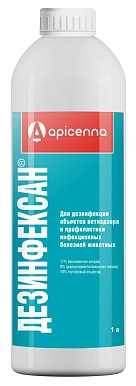
Apicenna’s Disinfexan has proven itself well.
It effectively destroys bacteria, including Mycobacterium tuberculosis, spore-forming varieties, as well as viruses, fungi (including mold), parasites and their eggs.
It is recommended to apply the Disinfexan solution using fine-droplet irrigation. The solution should be allowed to act on the treated surface (exposure time) for one hour.